Cocoa Sourcing: Establishing Traceable, Ethical, Low-Carbon Value Chains
Papua New Guinea · Solomon Islands
Somewhere between a volcano on Kar Kar Island and banana trees in the Markham Valley, a simple question starts to answer itself: where does chocolate actually come from? A sourcing trip through Papua New Guinea and the Solomon Islands offers a rare and grounding education in what a traceable, sustainable value chain looks like at its very beginning.
The Scale of the Industry and Its Shadow
Around 4.5 million tonnes of cocoa are produced globally each year. Seventy per cent comes out of West Africa, primarily Côte d’Ivoire and Ghana where the economics of commodity production have long compressed farmer incomes to the point where the industry’s most persistent problems take root. In 2019, more than 1.56 million children were engaged in child labour across West Africa’s cocoa sector alone. Meanwhile, individual smallholder farms typically two to five hectares generate yields that leave 78 per cent of cocoa farmers earning below a living income. The cocoa frontier has continued to expand into forests, with cocoa cultivation accounting for nearly half of all forest loss in Côte d’Ivoire and Ghana between 2000 and 2019. These are not edge cases. They are structural features of a supply chain dominated by a handful of multinationals Nestlé, Mondelez and Hershey’s whose purchasing volumes make traceability commercially inconvenient.
The Pacific sits at the opposite end of this picture. The Solomon Islands, Papua New Guinea, Samoa, and Fiji together produce less than two per cent of the world’s cocoa. That small share, however, hides a disproportionately important story about what fine-flavour cacao, direct relationships, and genuine traceability can look like and why they matter.
Genetics, Grafting, and the Art of Good Cocoa
Across plantations in PNG and the Solomons, plants are cloned to preserve and propagate genetics believed to produce the finest-tasting chocolate in the world. Beans are germinated, grown into young trees, and grafted onto larger, thriving specimens with established root systems and strong yield histories. Some trees are trellised a labour-intensive intervention that improves harvest volumes and eases the physical demands on farmers working long days in tropical heat.
There is a real tradition to good cocoa, and it is inseparable from deep familiarity with the land. The workers who tend these farms carry intergenerational knowledge about when to harvest, how to identify a ripe pod, how long to ferment, what makes a batch exceptional accumulates across years. What keeps people going through the physical difficulty of the work is that cocoa is in the blood.
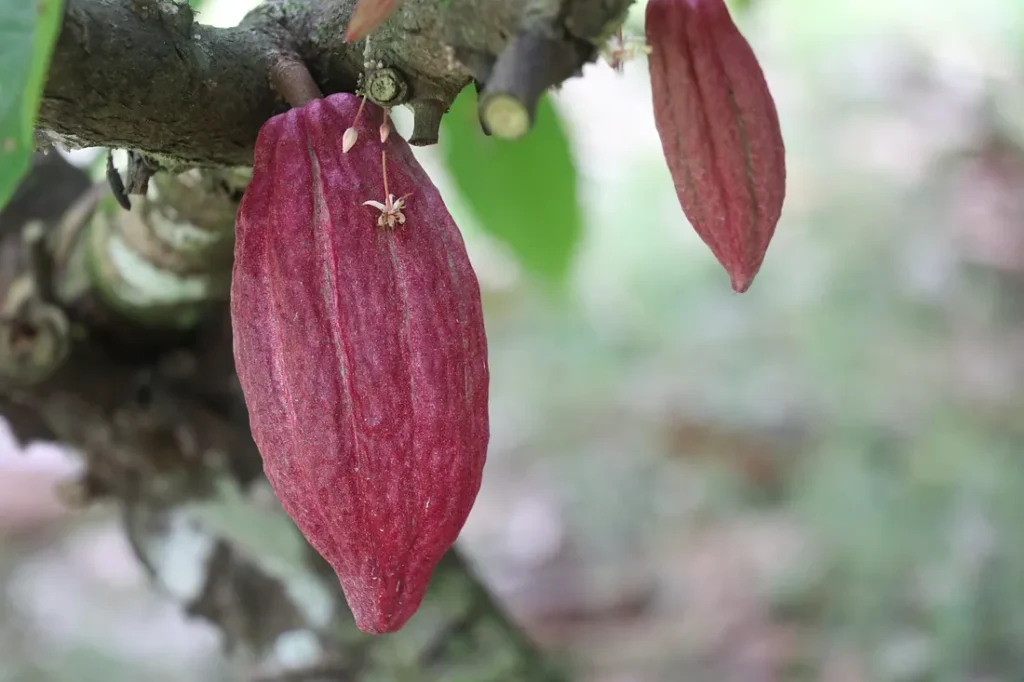
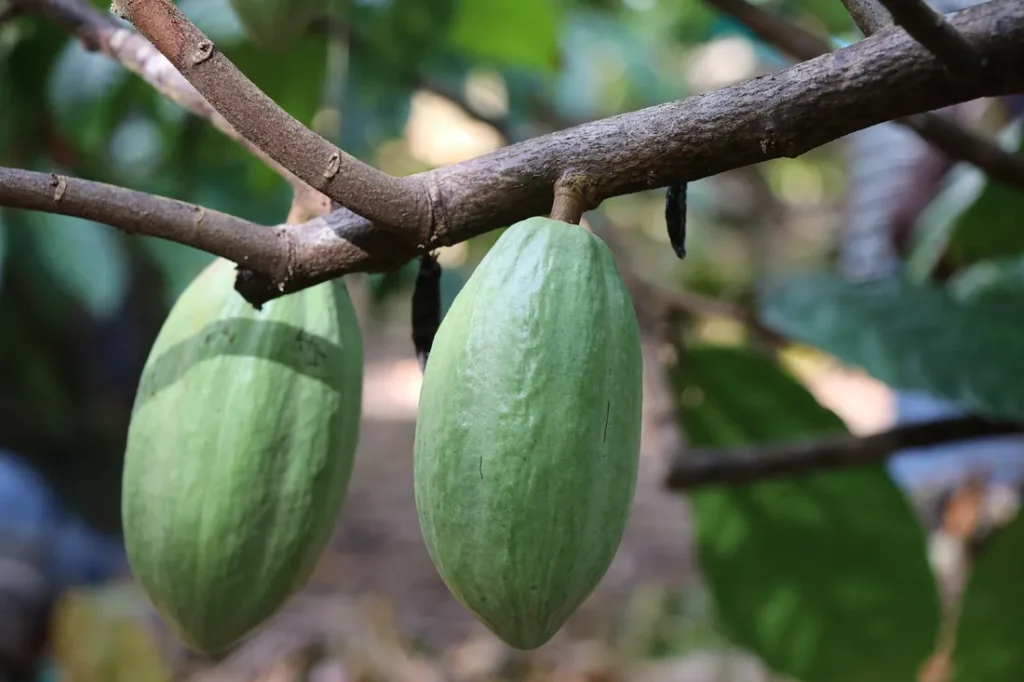
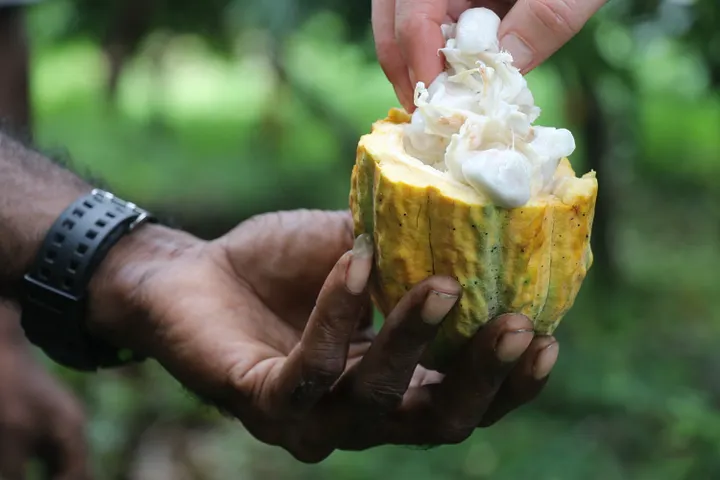
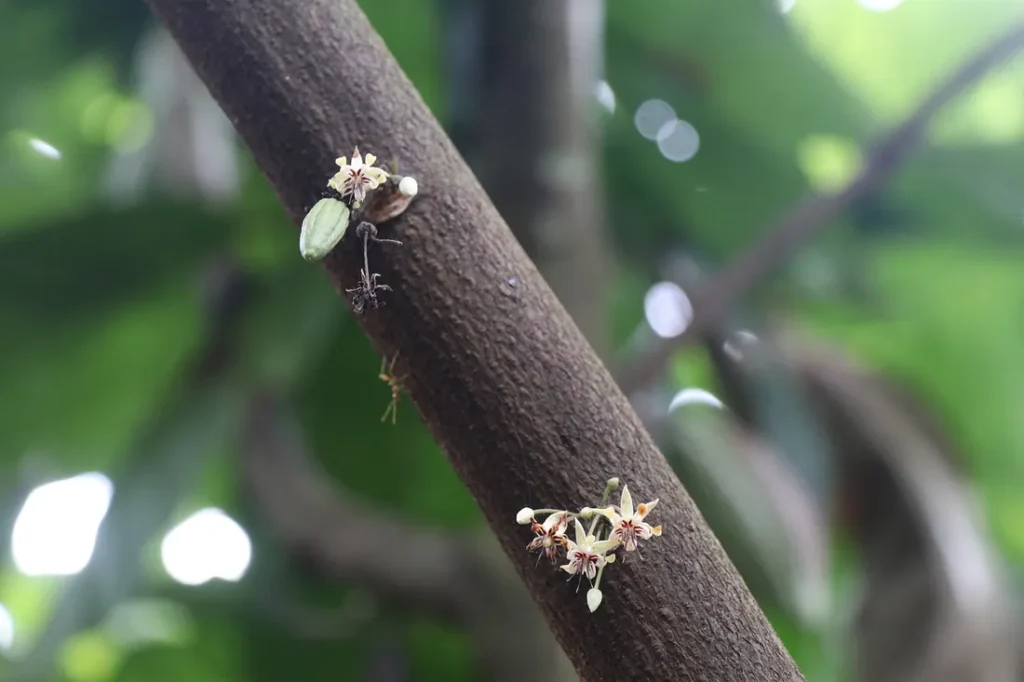
The moment of first encounter with a fresh cocoa pod upends every assumption built from years of eating the processed end product. The pods themselves are luscious vivid greens and purples on the tree. The flesh around the beans, when eaten raw, tastes nothing like chocolate. It is bright, almost tropical: something like mashed banana steeped in lemon and raspberry. The bean inside is intensely bitter. The journey from that raw bitterness to fine chocolate is long, biological, and entirely dependent on the skill of everyone who touches it along the way.
From Pod to Fermentary: How the Chain Works
Harvesting is typically women’s work. Pods are opened beneath the trees with a machete or a stick a practised, efficient motion and the wet beans are bagged for transport. If the harvest runs long into the day or stretches across multiple days, bags are concealed under leaves overnight to protect against theft. Security of harvest is never guaranteed.
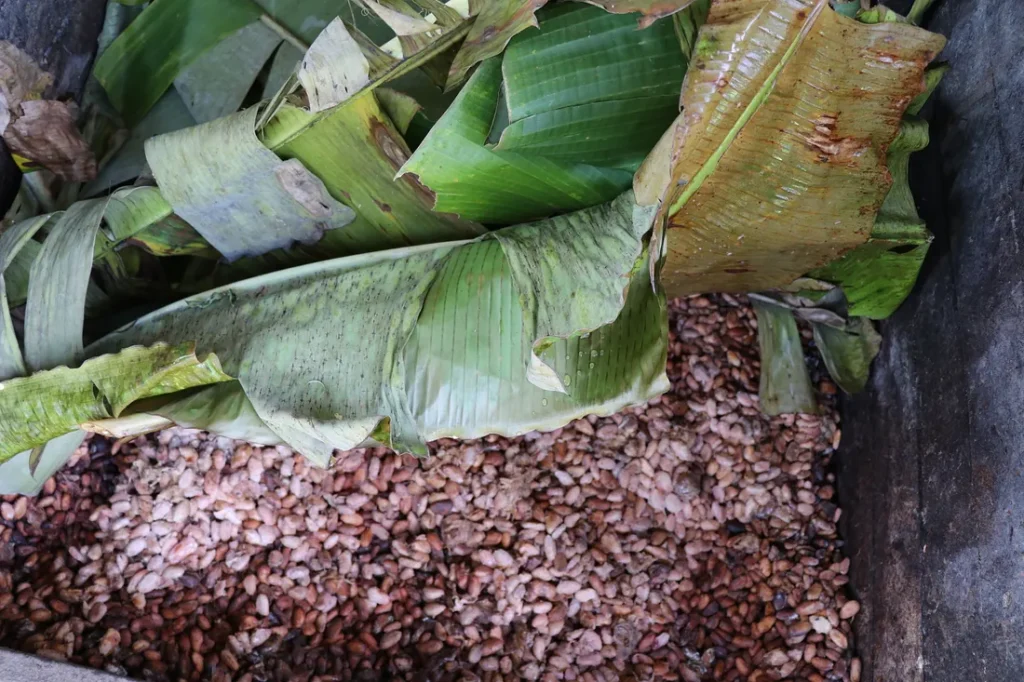
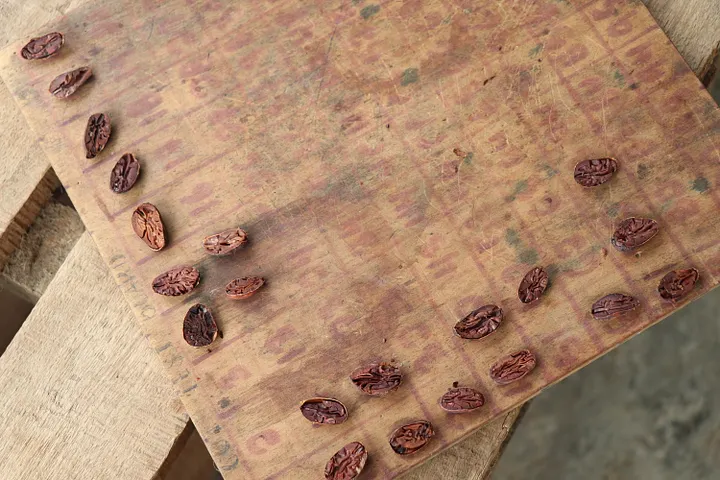
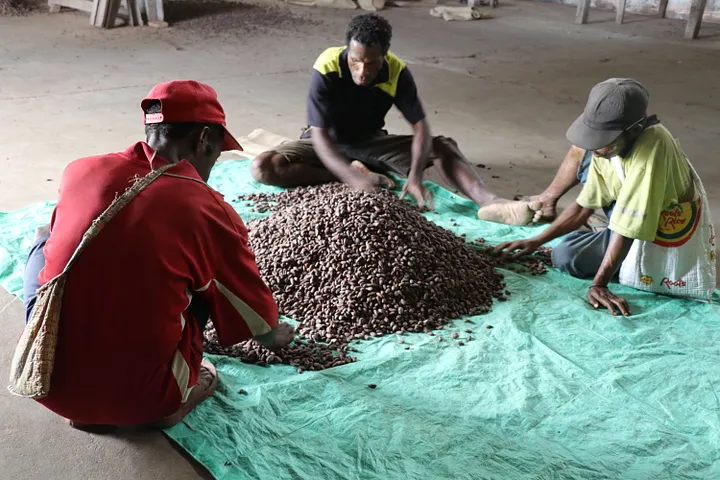
The wet beans are brought to a fermentary, where they spend between five and ten days in wooden crates layered with banana leaves. The mucilage surrounding each bean breaks down through microbial activity, creating the acidic, vinegary smell that defines a working fermentary. This step is critical. The quality of fermentation temperature, timing, turning frequency determines the flavour complexity of the finished chocolate. A poorly fermented batch is a batch that cannot command a premium, no matter how good the genetics of the tree.
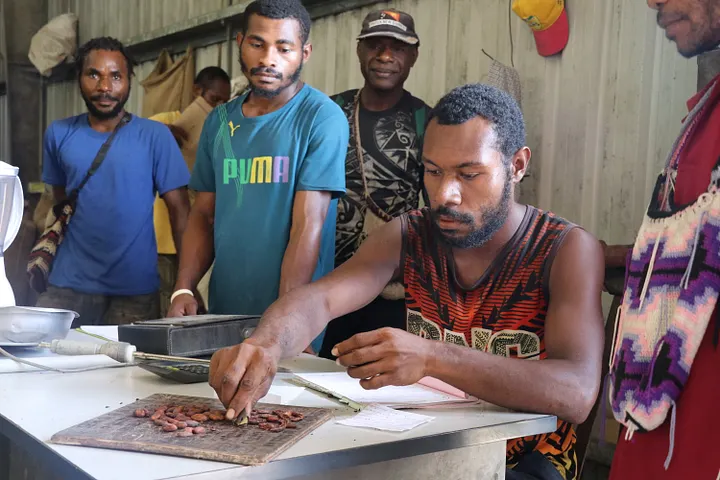
After fermentation, beans are dried and bagged again for transport to a broker. The broker weighs them, measures moisture levels, assesses colour and quality, and pays the farmer historically, by cheque cashed at a bank. For farmers in remote areas, that banking transaction represents its own logistical challenge: time away from the farm, travel costs, and dependence on financial infrastructure that reaches unevenly across the Pacific.
The SolChoc Festival: Building a Market Through Connection
The SolChoc Festival in Honiara is one of those events that demonstrates what happens when the right people occupy the same room at the right time. Held annually in the Solomon Islands, SolChoc brings together farmers, brokers, international craft chocolate makers, development agencies, and government representatives to build the connections that commodity markets structurally prevent.
The 2019 festival, held at the National Museum in Honiara and supported by Australian Aid, Strongim Bisnis, CEMA (the Commodities Export Marketing Authority), ADRA, and PHAMA, centred on a cocoa competition in which farmer-submitted beans were processed into chocolate by international judges and blindly tasted. Fourteen per cent of the competition entries in 2019 came from farms managed entirely by women a marker of women’s significant and often uncounted contribution to the Solomon Islands cocoa sector, which Strongim Bisnis has been specifically working to recognise and support.
The festival is not merely celebratory. Sessions focus on genetics, fermentation, quality control, and value-add practical knowledge transfer that helps farmers understand how their decisions in the field affect what a craft chocolate maker three thousand kilometres away can achieve. The competition element matters too: for farmers like David Kebu of Guadalcanal who placed third at the International Cocoa Excellence Awards in 2015 recognition at events like SolChoc is a direct route to premium pricing relationships with buyers who will pay substantially above the commodity rate for traceable, high-quality beans.
The Solomons cocoa sector involves an estimated 20,000 to 25,000 smallholder farming households, producing around 4,000 to 5,000 tonnes annually. With 75 per cent of export returns retained by producers a figure that stands in stark contrast to West Africa’s commodity structures the economic model here is fundamentally different, and the SolChoc ecosystem exists in part to protect and deepen it.
Papua New Guinea: Scale, Terrain, and Resilience
Getting cocoa from a plantation in the Markham Valley or on Kar Kar Island to an international market involves infrastructure challenges that would stress any supply chain. Bridges washed out by flooding, ships rusting at anchor, small banana boats battling open-water swells the physical logistics are relentless. The drive from Lae to Madang through the Markham Valley takes a full day. The road is so rough that photographs taken from a moving vehicle come out blurred regardless of the camera.
Yet people find ways through, and have done so for generations. Roadside stalls appear wherever people gather coconuts, noodles, phone top-ups, whatever the traffic will support. The informal economy is an expression of necessity, resilience, and entrepreneurial instinct that formal development models consistently undervalue.
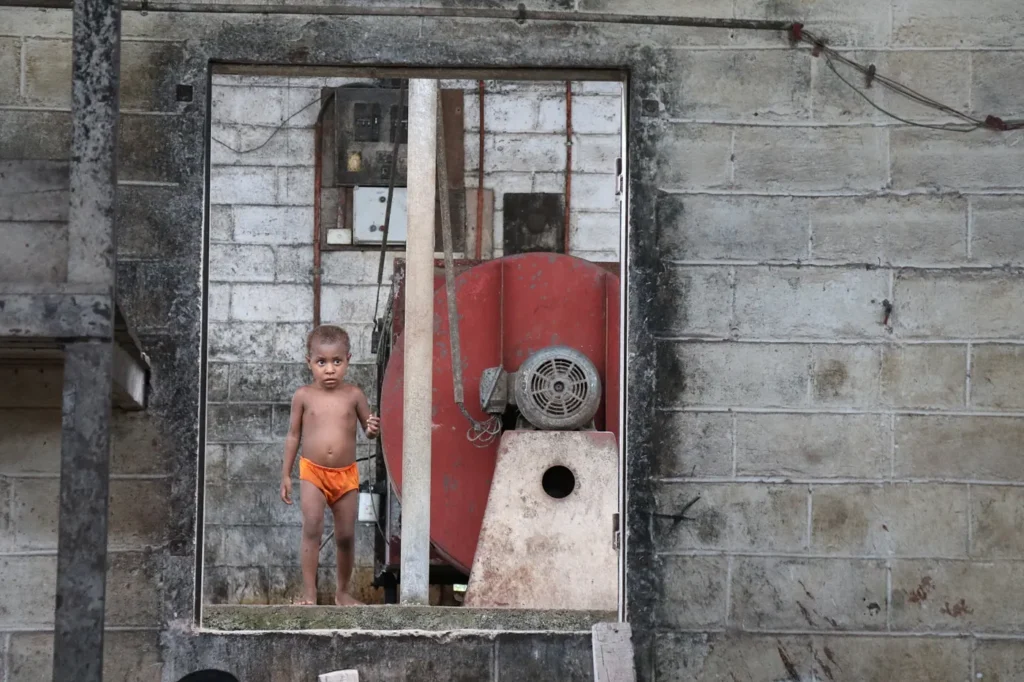
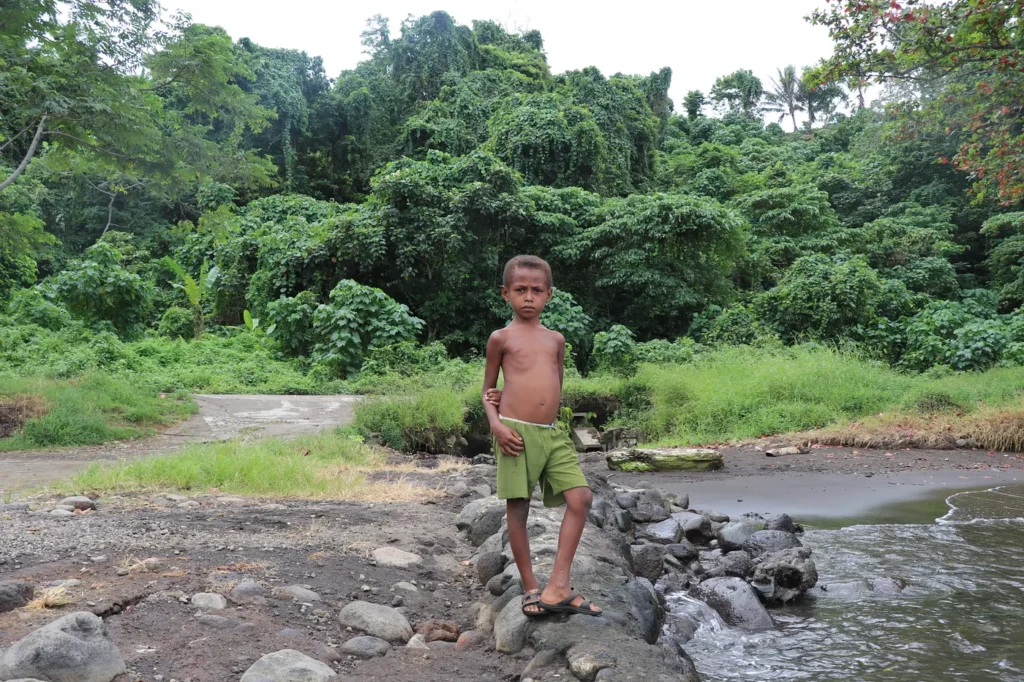
Kar Kar Island, reachable by the coast north of Madang, is a landscape of a different order entirely. Ancient coconut palms tower above the cocoa plantations, some of them hundreds of years old. The main exports are dried coconut copra and cocoa. Children roam freely across the island, raised communally, with the ease of a place where trust in the broader community has never broken down. It is both beautiful and precarious: Kar Kar is a volcanic island, and the sea around it is already changing.
For the first time on record, cocoa in this region was being harvested year-round by 2019, rather than following the traditional twice-yearly pattern. The change drew no alarm from the farmers themselves the Pacific relationship with climate variability tends toward the stoic but it is the kind of signal that sits uncomfortably alongside projections about sea-level rise and extreme weather events in the region. These islands and the communities on them are acutely vulnerable.
The Global Cocoa Market in 2019: A System Under Pressure
This initiative place against the backdrop of a global cocoa industry in genuine structural tension. West Africa’s production dominance with Côte d’Ivoire alone accounting for around 40 per cent of global supply comes with environmental and social costs that the industry’s largest players have repeatedly committed to address and repeatedly failed to resolve. The Cocoa and Forests Initiative, launched in 2017, brought together major producing governments and 35 of the world’s largest chocolate companies to halt deforestation linked to cocoa cultivation. By 2019, the forest frontier was still expanding.
In 2018 and 2019, West Africa saw a 5.5 per cent drop in cocoa production, driven partly by poor weather conditions and partly by the structural disinvestment that comes from persistently low farm-gate prices. Meanwhile, about 85 per cent of certified, voluntary-sustainability-standard-compliant cocoa globally came from Africa a statistic that reveals the gap between certification as a purchasing credential and certification as a route to farmer prosperity.
For craft chocolate makers sourcing from the Pacific, the contrast is clarifying. The supply chains are shorter, the relationships more direct, the traceability more genuine, and the percentage of revenue reaching the farmer significantly higher. The Pacific cannot compete with West Africa on volume it produces a fraction of global supply but volume is not the point. The carbon footprint shipping cocoa around the world is significant. Regional sourcing is the key to low-carbon cocoa. The point is demonstrating what a supply chain designed around quality, ethics, and genuine partnership looks like in practice.
Vanilla: The World’s Most Labour-Intensive Spice
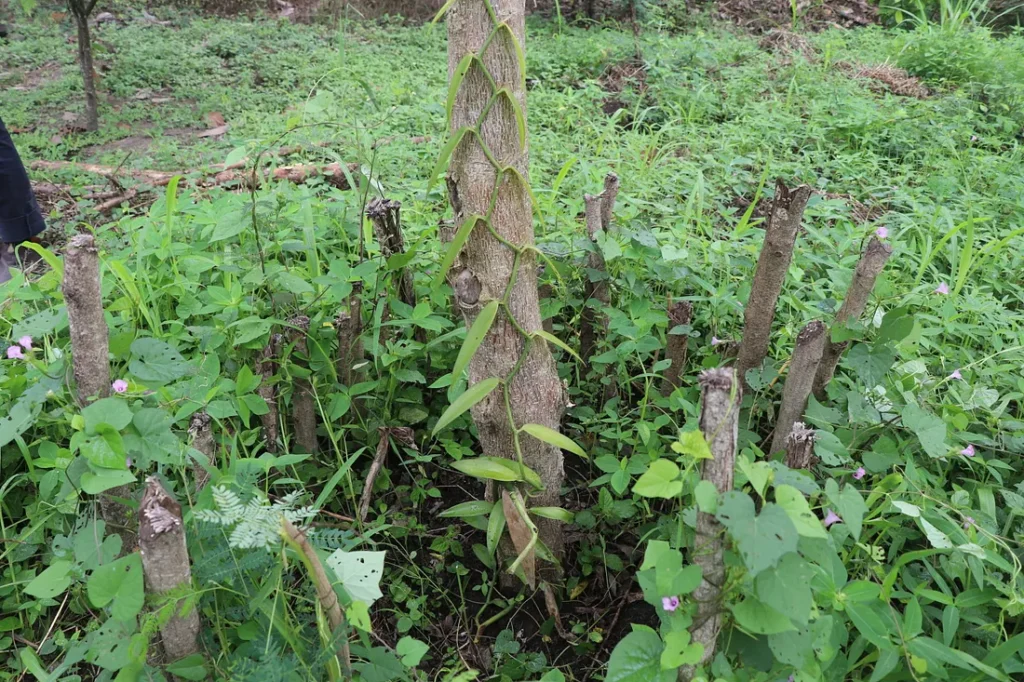
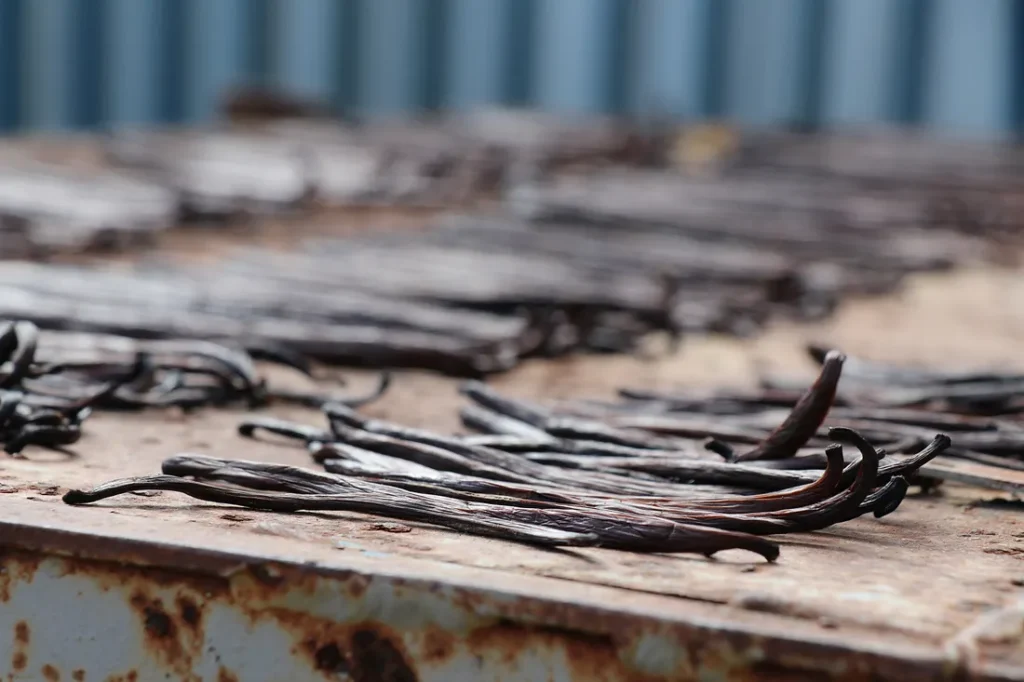
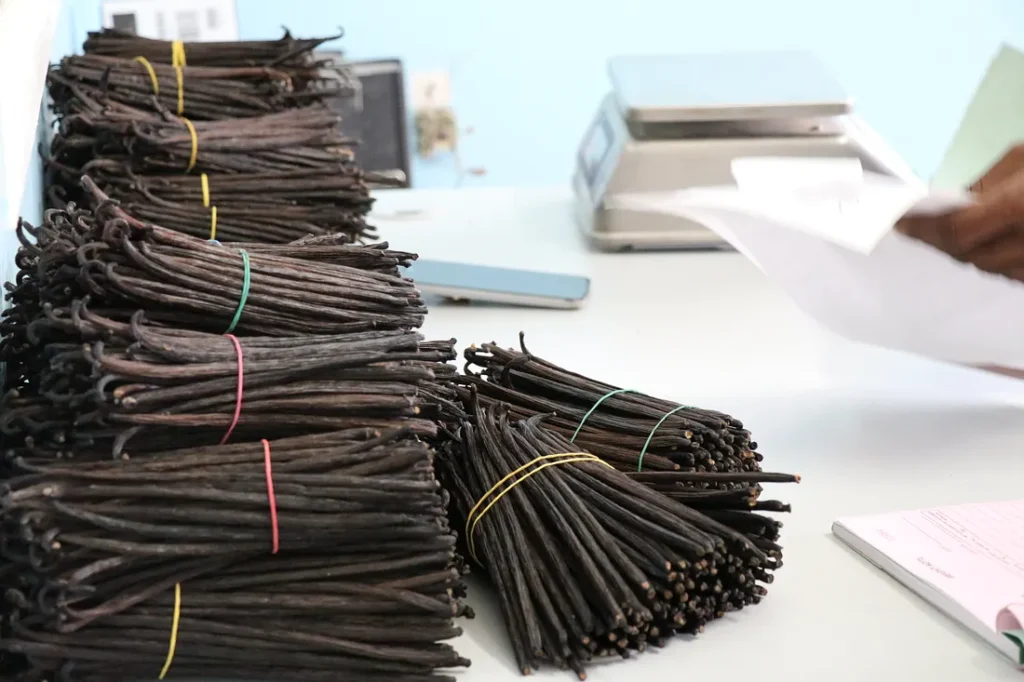
Alongside cocoa, vanilla cultivation is another story in precision, patience, and pricing volatility. On farms in Madang, vanilla vines are trained up support structures and tended with close attention. The flower, which blooms for only a single day and must be hand-pollinated since the only natural pollinator, the Melipona bee, exists only in Mexico produces a long, slender pod. The pods are boiled and dried before being graded by a broker and prepared for market.
In 2019, vanilla commanded around USD $400–$450 per kilogram at its recent peak, making it the second most expensive spice in the world by weight after saffron. That price cited at approximately $450 per kilogram in the Madang region reflects years of work, extraordinary vulnerability to weather events, and the extraordinary labour intensity of hand pollination. The pride farmers take in their vanilla crop is fully proportionate to what it costs to produce it.
The global vanilla market in 2019 was, however, in significant flux. Madagascar, which supplies approximately 80 per cent of the world’s vanilla, had just passed through a period of record-high prices reaching $600 per kilogram in 2018 driven partly by Cyclone Enawo in 2017, which devastated Madagascar’s crop. Those high prices triggered massive new plantings in Madagascar, Uganda, Indonesia, and Papua New Guinea. By late 2019, prices had fallen by roughly a third from the peak, and analysts were warning of potential oversupply.
PNG was emerging as a meaningful player in the premium vanilla market. Tahitian vanilla from PNG from the Vanilla tahitensis species had been gaining international recognition, and industry estimates placed PNG’s 2019 production at between 150 and 200 tonnes of pods. The gourmet quality of PNG vanilla was finding a market, particularly in food service and specialty food manufacturing. The challenge was ensuring that falling global prices didn’t undermine the economics of production for small farmers who had invested years into establishing their vines.
What the Value Chain Looks Like in Practice
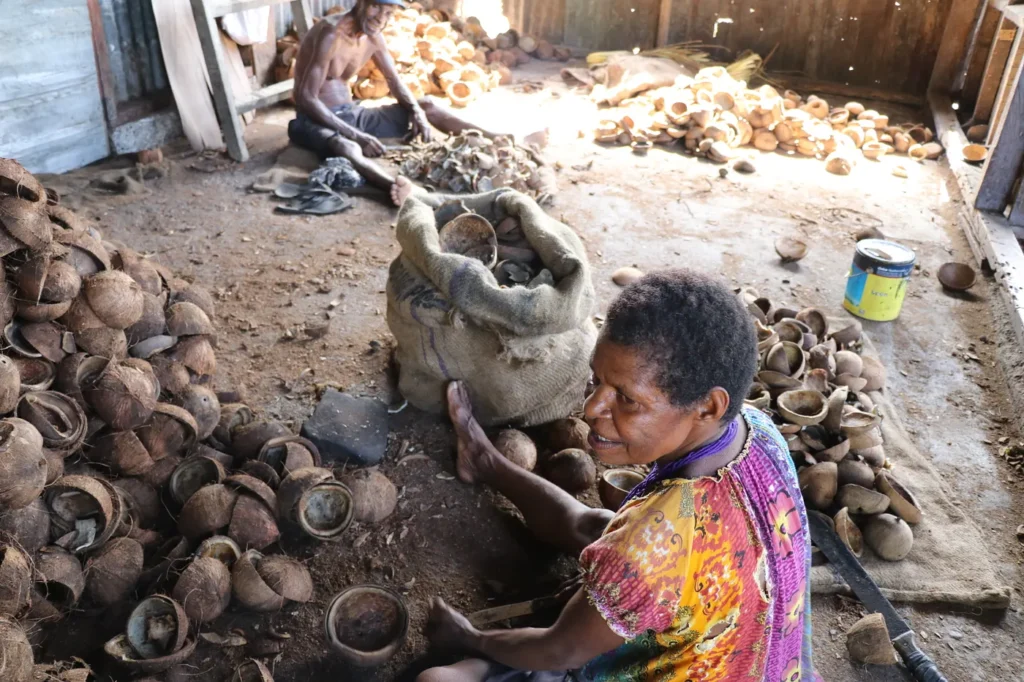
At a coconut processing hut beside a cocoa fermentary in Madang, workers chip coconut flesh out by hand into a mountainous pile of dried shells. It is physical, repetitive work, and they are smiling. That detail is worth sitting with. The dominant narrative about commodity production in the developing world tends toward either romanticisation or despair. What the Pacific supply chain reveals is something more complicated and more human: people doing hard work in difficult conditions, and taking genuine satisfaction in their expertise.
The network of people making this supply chain function development agencies like Australian Aid, Strongim Bisnis, CEMA, ADRA, and PHAMA; brokers and traders connecting local farmers to international buyers; craft chocolate makers willing to travel to source relationships rather than simply purchase from aggregators is what makes traceability possible. Without that network, cocoa from a remote village in Guadalcanal or a plantation on Kar Kar Island disappears into the bulk market and becomes indistinguishable from beans grown under very different conditions by very different means.
If there were a meaningful ‘goodness scale’ in sustainable sourcing, the wellbeing of people at the start of the value chain would have to sit at its foundation. A farmer who knows who will buy their cocoa, at what price, and why quality matters and who has been visited by someone from the company that makes the end product is in a fundamentally different position from a farmer who has no idea where their beans go after the broker weighs them.
A Small Company’s Large Claim on the Value Chain
This trip was made possible by Dunedin-based craft chocolate maker OCHO, whose sourcing model in 2019 was centred entirely on the Pacific. Following the closure of the Cadbury factory in Dunedin in 2017 a closure that prompted a NZD $2 million community crowdfunding campaign to replace it OCHO was built on a clear principle: that a chocolate company operating in the South Pacific has both the opportunity and the obligation to source from its nearest neighbours.
For a small producer, the commitment to traceable, directly-sourced beans from PNG, the Solomon Islands, and Fiji is commercially demanding. It requires travel, relationship-building across language and cultural difference, and the willingness to pay above commodity rates for quality beans. It also requires caring about what happens to farmers Agnes Pillopaso, Robert Waisu, and David Kebu in the Solomons, and to the people of Madang Valley, the Niduk Tribe, Barbara, Paul, and the team at Kul Kul on Kar Kar Island not as abstract beneficiaries of an ethical supply chain, but as people whose skill, generosity, and hard work are literally the foundation of what ends up on a shelf.
The connection between value chain theory studied in a classroom and the reality of standing at a fermentary in PNG is not a gap that can be bridged by certification alone. It requires presence. It requires curiosity about where things come from. And it produces, in return, something that no supply chain audit can manufacture: genuine gratitude, genuine accountability, and a supply chain that means something to the people inside it.
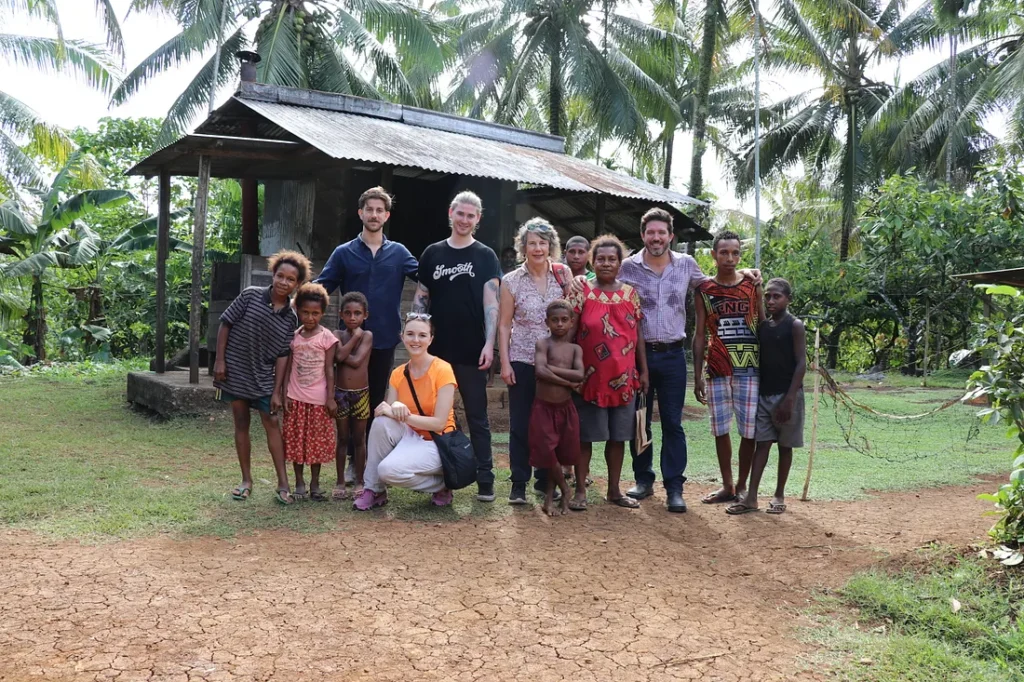
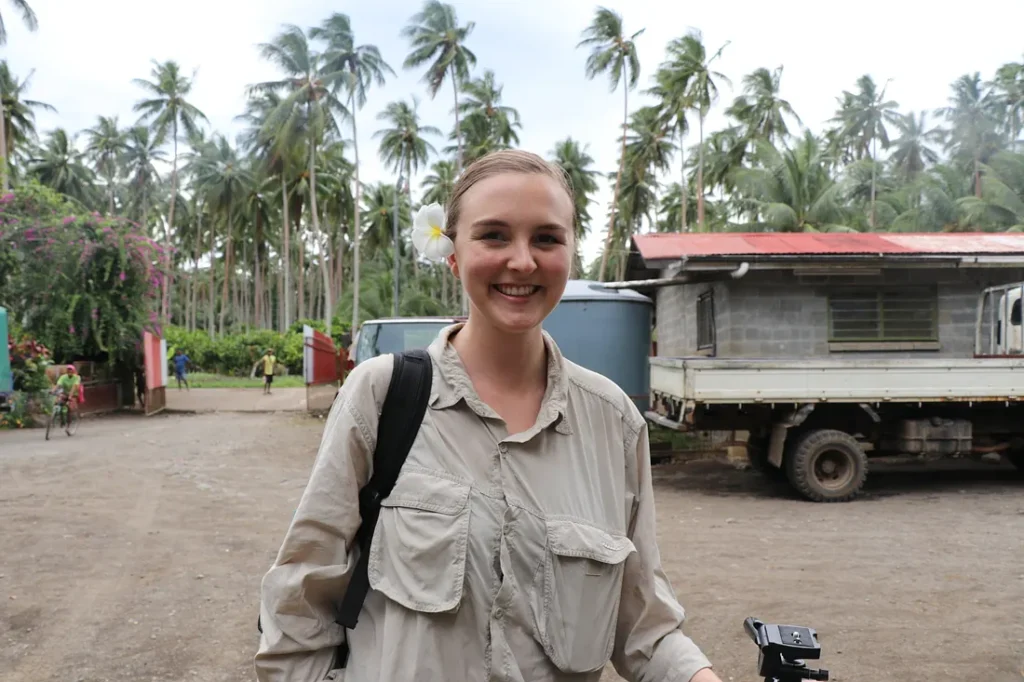
Thanks to OCHO for the opportunity to make this trip; to Hannah from PHAMA, David from ADRA, Cas from Australian Aid, Brian from Makira, Charles from Atypic, Trevor from Metiisto, Chris from Bean Bar You, Juan from WCF, and Ron from Elliven; and above all to the farmers — Agnes Pillopaso, Robert Waisu and David Kebu in the Solomons, and in PNG the people of Madang Valley, the Niduk Tribe, Barbara, Paul, and the team at Kul Kul on Kar Kar Island.