Building the Future: Integrating Culture, Education and Empowerment for Sustainability.
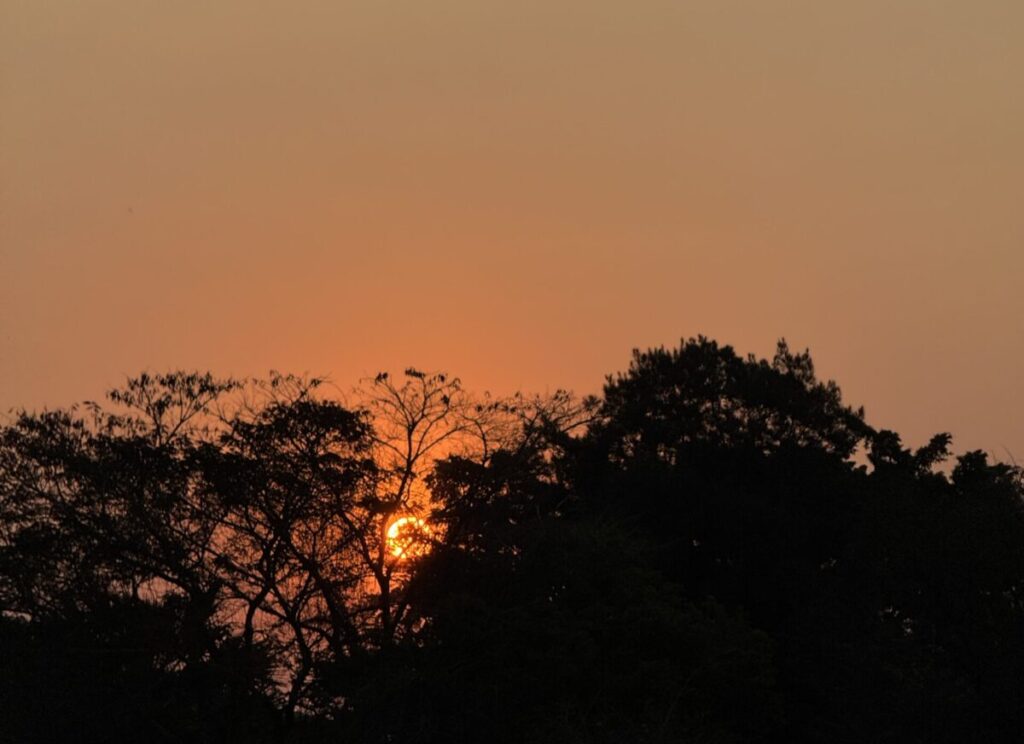
Lusaka, Zambia
When Graduate Women International convened its 35th Triennial General Assembly and Conference in Lusaka in September 2025, it brought together around 100 members from 19 countries in a city that had spent the preceding year navigating one of Africa’s most visible climate crises. The choice of Zambia as host was more than symbolic — it placed the conference in a context where the relationship between education, energy, environment, and women’s empowerment was not theoretical but immediate and daily.
The theme — Building the Future: Integrating Culture, Education, and Empowerment for Sustainability — framed three days of dialogue, resolution-making, and cross-cultural exchange that reaffirmed GWI’s position at the intersection of global advocacy and grassroots action. The resolutions adopted at Lusaka will guide the organisation’s international work for the next three years, across its national affiliates and representative offices at the United Nations in New York, Geneva, and Vienna.
About Graduate Women International: A Century of Advocacy
Graduate Women International — known until 2015 as the International Federation of University Women (IFUW) — has one of the longest continuous records of advocacy for women’s education of any civil society organisation in the world. Founded in 1919 in the aftermath of the First World War, by British and North American university women committed to building congenial relations across nationalities, GWI has spent more than a century articulating a single core argument: that access to quality education, from secondary school through to postgraduate research, is the foundational condition for women’s rights, equality, and empowerment.
Headquartered in Geneva, Switzerland, GWI is an incorporated non-governmental organisation with national affiliates in 60 countries and individual members in more than 40 more. It holds General Consultative Status with the United Nations Economic and Social Council (ECOSOC), the highest level of accreditation available to NGOs — a status it has held since 1947. This accreditation allows GWI representatives to attend sessions of ECOSOC, the Commission on the Status of Women (CSW), the Commission on Social Development, UNICEF, and the High-Level Political Forum on Sustainable Development, among others. In Geneva, GWI engages with the Human Rights Council, CEDAW, and the International Labour Organization. In Vienna, it contributes to the Commission on Crime Prevention and Criminal Justice.
This infrastructure — built carefully across decades — means that resolutions adopted at GWI’s triennial general assemblies do not remain on paper. They become advocacy positions, oral and written statements, and negotiating interventions in the rooms where international law and policy are actually written.
The organisation’s work is structured around Education for All: secondary education, tertiary education, continuing education, and non-traditional pathways. Its goal is unambiguous — 100 per cent of girls and women worldwide should achieve an education beyond primary school. Against that benchmark, the world still has a very long way to go.
A History Written Through Resolutions
GWI’s triennial resolutions are, in aggregate, one of the most coherent long-term records of civil society policy priorities on gender and education in existence. Over the decades, GWI has resolved on safe motherhood (1992), environmental protection (1989, 1992, 1995), endangered ecosystems (1992), climate change and greenhouse gas emissions (2010), carbon taxes (2016), sustainable development goals implementation (2019), gender in climate policy (2022), and climate emergency declarations (2022).
This is not a snapshot record but a cumulative one — each new resolution builds explicitly on what came before. Resolution 6 adopted at Lusaka, on the protection and restoration of global peatlands, notes that it builds on four prior resolutions: Environment Our Common Future (1989), Endangered Ecosystems (1992), Protection of the Environment (1995), and a 2024 CFUW resolution specific to peatlands. Resolution 7, on preserving deep sea ecosystems, builds on GWI’s Marine Environment (1992) and Endangered Ecosystems (1992) resolutions. This institutional memory — rare in civil society — means GWI doesn’t cycle through issues but develops them, deepening analysis and specificity over time.
The Lusaka conference elected a new Board of Officers for the 2026–2028 triennium and issued a statement calling on member states to ensure equal access to digital education for women and girls, stressing that digital literacy is integral to the right to education in the digital era and essential for achieving gender equality.
The Eight Resolutions of the 35th Triennial
The eight resolutions adopted in Lusaka in September 2025 span a deliberately wide terrain — from the rights of doctoral researchers to the governance of deep sea mining — and in doing so, illustrate the breadth of what GWI means when it says education and empowerment are indivisible from justice, environment, and peace.
Resolution 1: Equitable Rights for Postgraduate Researchers, proposed by Graduate Women Scotland and seconded by the British Federation of Women Graduates and the Turkish Association of University Women, calls for adjustments to laws and institutional policies to ensure postgraduate researchers receive the same rights as employees — with particular focus on parental leave and, for international students, equitable visa regulations. As increasing numbers of women pursue doctoral studies during the years in which they would traditionally take on parental responsibilities, the absence of consistent parental leave policies disproportionately affects them. An international student whose visa terms don’t accommodate unfunded parental leave may face the impossible choice between her visa status and her health. Addressing this is not administrative tidiness — it is a structural barrier to women’s full participation in the knowledge economy.
Resolution 2: Advancing Gender Equity in Artificial Intelligence, proposed by Women Graduates-USA and seconded by the Indian Federation of Women Graduates, calls for women’s leadership in the development of AI algorithms and in the design of ethical, equitable, and inclusive AI systems. GWI has a track record of engagement on digital equity going back to its work with the World Summit on the Information Society (WSIS) in 2003. This resolution positions AI not as a neutral tool but as one that, without deliberate gender inclusion, risks replicating and accelerating existing inequalities in governance, healthcare, education, and economic opportunity. It calls for advocacy at CSW, at UN Internet Governance Forum sessions, and through national policy processes.
Resolution 3: Taking Action Globally to End Stalking, Harassment, and Cyberbullying, proposed by Graduate Women New Zealand and seconded by Australian Graduate Women, calls on governments to introduce legislative frameworks that address online and real-world stalking as criminal offences, and for law enforcement to receive adequate training. In today’s environment, where women’s participation in public and professional life is increasingly mediated through digital spaces, online violence is a direct barrier to women’s educational and professional advancement. This resolution links to UN SDG 16 — Peace, Justice, and Strong Institutions — recognising that safety in digital spaces is inseparable from safety in physical ones.
Resolution 4: Towards a Comprehensive Maternal Death Prevention Strategy, proposed by the Canadian Federation of University Women and seconded by the Uganda Association of University Women, builds on GWI’s 1992 Safe Motherhood resolution and calls for governments to collect and analyse consistent disaggregated data on maternal deaths and to develop comprehensive prevention strategies that address risk factors including age, early marriage, ethnicity, income, and access to care. Globally, every two minutes a woman still dies during pregnancy or childbirth, with approximately 70 per cent of those deaths occurring in sub-Saharan Africa. Most are preventable.
Resolution 5: Advancing Sustainable Development and Gender Equality through International Trade Agreements, proposed by CFUW and seconded by Women Graduates-USA, calls on governments to use international trade agreements as tools to advance the UN’s 17 Sustainable Development Goals, and to consult with civil society organisations in developing, monitoring, and evaluating trade agreements’ gendered impacts. Trade rules that set commodity prices, environmental standards, and employment conditions in manufacturing and agriculture affect women profoundly — as workers, producers, entrepreneurs, and consumers. GWI’s position is that gender provisions in trade agreements are not additions to the primary business of trade; they are intrinsic to whether trade delivers equitable development.
Resolution 6: Restore, Preserve and Protect Global Peatlands, proposed by CFUW and co-sponsored by Graduate Women Scotland and Paraguay Federation Graduate Women, calls on governments to implement legislation to protect and restore degraded peatlands, adhere to Ramsar Convention guidelines, and fund research to identify peatlands across their territories. Peatlands cover just three per cent of the Earth’s surface but store 30 per cent of all land-based carbon. When they are drained or damaged, stored carbon is released, contributing significantly to greenhouse gas emissions. This resolution also explicitly names the triple threat facing indigenous women: climate change, biodiversity loss, and gender inequality — recognising that ecological stewardship and gender justice cannot be separated.
Resolution 7: Preserving Deep Sea Ecosystems, proposed by CFUW and seconded by Australian Graduate Women, calls for governments to protect deep sea ecosystems by pressing the International Seabed Authority to declare a precautionary pause on international deep seabed mining activities until comprehensive, science-based regulations are developed. The resolution identifies a pressing governance loophole — the two-year rule — that could allow mining to proceed without adequate regulatory protection. It links directly to UN SDG 14, on the sustainable use of oceans and marine resources.
Resolution 8: International and Domestic Legislation to Prevent Further Destruction of the Natural Environment, proposed by Women Graduates-USA and the Spanish Federation of University Women, and seconded by the Indian Federation of University Women, resolves to advocate for ecocide to be recognised as an international crime and for both international and domestic governments to pass laws preventing the deliberate or negligent destruction of natural environments. The resolution frames ecocide not as an abstract legal concept but as a gravity-level issue for women and girls in all developmental aspects — education, poverty, health, migration, violence, and economic participation. It builds on a long sequence of GWI climate resolutions and positions environmental law as a feminist issue.
Education, Empowerment, and the SDGs
GWI’s triennial work sits at the heart of the United Nations Sustainable Development Goals, and the Lusaka resolutions advance several of them simultaneously. The explicit connections are worth naming.
SDG 4 — Quality Education — is GWI’s primary mandate: ensuring equitable, inclusive, and quality education and promoting lifelong learning opportunities for all. Every resolution adopted in Lusaka connects to this in some way, because education cannot be separated from the conditions that make it possible or impossible for women and girls to access and remain in school. Visa barriers for postgraduate researchers (Resolution 1) are education barriers. AI systems that replicate gender biases (Resolution 2) produce discriminatory educational outcomes. Online harassment (Resolution 3) drives women out of academic and professional digital spaces. Early marriage and poor maternal health (Resolution 4) end educational trajectories before they have properly begun.
SDG 5 — Gender Equality — runs through every resolution. SDG 13 — Climate Action — is addressed directly through Resolutions 6, 7, and 8. SDG 14 — Life Below Water — through Resolution 7. SDG 15 — Life on Land — through Resolution 6. SDG 16 — Peace, Justice, and Strong Institutions — through Resolutions 3 and 8. SDG 17 — Partnerships for the Goals — through Resolution 5.
The architecture of the Lusaka resolutions is, in effect, a feminist reading of the SDGs — showing how gender equity is not one goal among seventeen but the condition under which all others become achievable.
Zambia: Energy, Copper, and the Limits of a Single Resource Economy
The Mulungushi International Conference Centre in Lusaka is well-chosen for a conference on sustainability, because Zambia itself is a country living through one of the most consequential sustainability crises on the continent. A country whose economy is built on copper, and whose electricity grid is built on water, found itself in 2024 with neither functioning adequately.
Zambia is Africa’s second-largest copper producer. Copper generates approximately 70 per cent of the country’s export earnings. Without copper, there is no budget for schools, hospitals, infrastructure, or social services. The copper industry is, in the most direct sense, the foundation of development in Zambia — including the development of educational institutions that the GWI conference gathered to celebrate and support.
But copper smelting is enormously energy intensive. And Zambia relies on hydropower for approximately 85 per cent of its electricity supply. The critical hub is the Kariba Dam, which sits on the Zambezi River and constitutes one of the world’s largest man-made reservoirs. When rainfall is good, Kariba fills, turbines spin, and the grid functions. When drought strikes — as it did with historic severity in 2024, driven by El Niño — the reservoir drops, turbines slow, and the country faces electricity shortfalls that are not merely inconvenient but structurally destabilising.
During the 2024 drought, Zambia’s state power utility Zesco asked mining companies to curtail power use by 40 per cent of normal demand. Households endured power cuts lasting 12 hours or more per day. First Quantum Minerals, responsible for more than half of Zambia’s copper output, was forced to source emergency electricity from Namibia and Mozambique to keep operations running. The problem was blunt: Zambia had almost no alternative to hydropower at scale, and no existing solar technology is capable of running industrial copper smelters at the temperatures and continuous loads required.
This is the energy trap of a single-source economy confronting climate variability. Zambia is not poorly governed or poorly resourced relative to its history. It is structurally exposed. Coal-fired backup capacity is minimal. Solar and wind are growing but cannot yet substitute for base-load industrial power. The technology to run copper smelters on renewable energy at commercial scale does not yet exist in deployable form. When the rains fail, the power fails — and with it, the economic engine that funds everything else.
Africa’s Energy Summit: Where the Younger Generation Is Looking
The context the GWI conference occupied in Zambia is also the context that the 2025 Africa Climate Summit, held in Addis Ababa under the theme Accelerating Global Climate Solutions: Financing for Africa’s Resilient and Green Development, was grappling with at a continental level. The summit brought together African leaders, financiers, policymakers, civil society, and a notably strong youth contingent — and the conversation among younger participants was, in many respects, different from the one happening in diplomatic corridors.
Young African climate advocates are not primarily interested in debating whether climate finance should happen. Their interest is in how to access it and how to scale it — and their instinct is to connect climate finance with digital capability, because they recognise that data, connectivity, and digital infrastructure are the prerequisites for sustainable development at any meaningful scale. In parallel, the Youth Energy Summit (YES!) 2025 in Cape Town connected thousands of young energy leaders exploring real solutions for decarbonisation across the continent, building networks of young people committed to Africa’s clean energy transition.
The argument is straightforward: you cannot manage what you cannot measure, and across much of Africa, the infrastructure for measurement — sensors, data networks, digital platforms — is absent or inadequate. Scaling renewable energy requires smart grids. Accessing climate finance requires financial systems and digital verification. Building resilient supply chains requires connectivity. The younger generation’s vision for addressing Africa’s energy vulnerability is one that treats digital capability not as a luxury layer on top of development but as foundational infrastructure without which sustainable development cannot be structured.
For Zambia, this framing opens possibilities. The country holds significant untapped potential for geothermal energy. First Quantum Minerals is partnering with TotalEnergies to develop a 430-megawatt wind and solar project. The question is whether the financing architecture — debt instruments, blended finance, climate funds — can be accessed and deployed at sufficient speed and scale to change the energy mix before the next drought.
The Girl in the Rural Classroom: Sanitation, Dignity, and School Attendance
The grandest debates about climate finance and energy transition happen a long way from the rural schools of Zambia’s Mumbwa and Rufunsa districts, where girls manage their menstruation using pieces of cloth — because that is what poverty and the absence of sanitation infrastructure leave available to them.
Menstrual poverty in Zambia’s rural schools is not an edge case. It is the structural norm. Research across multiple districts has documented what girls experience: toilets without doors, without locks, without soap or water. The absence of private changing facilities. The reliance on cloth that is uncomfortable, non-absorbent, and unreliable. The fear of leaking. The teasing from boys. The solution that presents itself to many girls, when menstruation arrives and the school environment cannot accommodate it with dignity: stay home.
Absenteeism during menstruation compounds across time into educational gaps that are never recovered. Girls who miss school when menstruating fall behind, disengage, and in the worst outcomes, do not return. The evidence is clear that inadequate menstrual hygiene management is a direct cause of girls’ reduced school participation and a contributor to dropout rates. It is an education issue, a health issue, and a justice issue — and it sits at the precise intersection of the budgetary silos that have made addressing it so slow.
The UN and most development institutions separate health budgets from education budgets. Menstrual hygiene in schools is neither cleanly one nor the other. It requires infrastructure (school construction budgets), products (health or social protection budgets), education about puberty and the body (health and curriculum budgets), and cultural change (community engagement programmes). When these budgets are siloed, no one is responsible, and the girls fall through the gaps.
UNICEF’s Water, Sanitation and Hygiene in Schools programme found that WHO standards for school sanitation were not being met in rural Zambia, directly compromising menstrual hygiene management practices. World Vision Zambia has distributed menstrual hygiene packs to girls in Manyinga and Mufumbwe districts, an important intervention — but also evidence that the state infrastructure these girls should be able to rely on is absent.
The link between functional toilets in rural schools and women’s equality at the systemic level is not metaphorical. It is causal. Girls who stay in school become women who participate in civic and economic life. Girls who are pushed out by infrastructural neglect do not. Every international resolution on women’s empowerment through education is qualified, in practice, by whether a girl can manage her period with dignity.
The Proposed UN Women–UNFPA Merger: A Question of Integration
One of the most consequential debates in the international architecture for gender equality since the Lusaka conference has been the proposed merger of UN Women and the United Nations Population Fund (UNFPA), as part of UN Secretary-General António Guterres’s UN80 systemwide reform initiative.
The proposal, framed as a structural efficiency measure in a context of severe funding pressure, would bring the two organisations together as a composite entity under a single governance structure while maintaining separate mandates. The initial assessment, published in March 2026, concluded that a merger is technically feasible if done with clearly defined safeguards.
Civil society’s response has been cautious and, in significant quarters, alarmed. More than 500 organisations signed an open letter warning that when sexual and reproductive health rights are absorbed into broader mandates, they can be deprioritised, underfunded, or rendered politically invisible. The concern is real and historically grounded: sexual and reproductive rights are among the most contested areas of gender policy, and their protection depends on dedicated institutional weight, not goodwill folded into a larger mandate.
But viewed from a different angle — and this is the angle that development practitioners working on education in rural Zambia often find themselves forced to articulate — the persistent siloing of health mandates from education mandates from gender equality mandates is itself part of the problem. The girl in the rural classroom whose attendance is compromised by the absence of sanitation infrastructure is experiencing a health failure, an education failure, and a gender equality failure simultaneously. No single siloed institutional mandate captures all three.
The question the merger debate is ultimately asking — even when it is asking it badly — is whether the international architecture for women’s and girls’ wellbeing is structured to match the actual lived reality of the problems it exists to solve. A healthy girl who cannot access education is not served well by institutions that only partly see her. An educated woman who cannot access reproductive health is not fully empowered. The intersections are not complications to be managed around — they are the point.
The challenge is ensuring that structural integration strengthens rather than weakens both mandates. If a merged entity produces genuine coherence between health, education, and gender equality programming, with adequate ring-fenced funding for reproductive rights and dedicated capacity for education-specific advocacy, it could represent a step forward. If it dilutes both mandates under pressure from the very political forces that would most benefit from their weakening, it represents a step back.
Conclusion: What Lusaka Said
The 35th Triennial General Assembly of Graduate Women International, held in a country that was living through an energy crisis rooted in climate change, during a year when the global consensus on women’s rights was under pressure from multiple directions, produced eight resolutions that are simultaneously practical and principled.
They call for legal reform in how postgraduate researchers are treated. For governance frameworks to ensure AI serves rather than harms women and girls. For legislative protection from stalking and online violence. For data systems that can prevent maternal death. For trade agreements to carry gender equality commitments. For the protection of peatlands, deep sea ecosystems, and the natural environment as a matter of both planetary and feminist concern.
Taken together, they make the argument that has always animated GWI: that education is not a single intervention but a set of conditions — physical, legal, economic, environmental, and social — that must all be present for women and girls to participate fully in the world. Zambia in 2025 provided a vivid illustration of what happens when those conditions fracture. The energy that powers schools also powers copper smelters, and when the rains don’t come, both suffer. The rural girl who can’t afford sanitary pads can’t fully participate in her education. The doctoral student on a visa that doesn’t account for parental leave is being asked to choose between her family and her career.
These are not separate problems. They are the same problem, encountered at different scales. GWI has spent over a century insisting on that connection — and the Lusaka resolutions carry that insistence forward.
Thank you to Graduate Women Otago for the Travel Grant in support of attending this event. Graduate Women International is based in Geneva, Switzerland. For more information visit graduatewomen.org. The next GWI Triennial General Assembly will take place in 2028.